
These three questions about the billing statement are the most frequently asked:
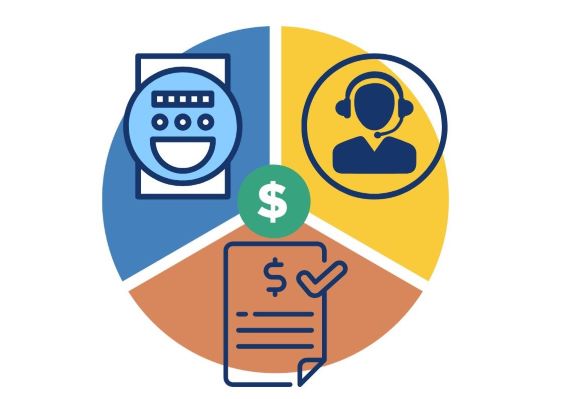
Q: What is the service fee for?
A: The service fee is a monthly charge also referred to as a “monthly facilities charge”. A cost-of-service study is conducted every three years, or as needed, and reviewed each year. In this study the “monthly facilities charge” consists of expenses related to 1) providing a minimum amount of electricity to the residential customer, and 2) expenses related to servicing a meter on the customer premises, in effect determining the cost to deliver a single kWh of electricity to the customer. The methodology used in this study is consistent with methodologies and practices used in the electric industry. The rate consultant then develops a rate plan to cover those costs.
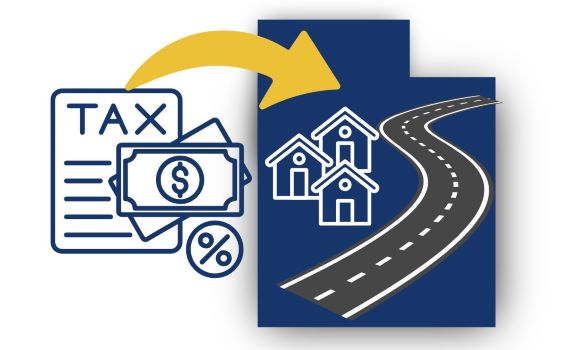
Q: Why are there so many taxes on my bill?
A: There are technically only two taxes on your bill, the sales tax, and the energy franchise tax. Heber Light & Power’s billing system breaks down each component of the sales tax. These are State, County, City, Highway, and Transportation sales taxes. For residential accounts, the State only charges 2% instead of the full amount, so residential meters do not pay the full sales tax rate. The energy franchise tax is available to municipalities as a separate tax from the sales tax. Each municipality sets their own rate up to 6%.
These taxes are pass-through only for Heber Light & Power. We have no control over the taxes and do not receive any funds from them.
Q: What is the demand charge?
A: The demand charge, measured in kW (kilowatts), has been a fixture of rate General Service (commercial) rates for many years. In April 2025, Heber Light & Power implemented a demand charge for the Residential rates as well. The short answer to why we need a demand charge is to encourage customers to not just think of the energy they use throughout the month, but how much they use all at once.
Not all energy users are the same. Customers have diverse ways of consuming electricity. The easiest way to think of this is large kW draw and low kWh usage over time. To demonstrate what this means for rates let us use an example. A home, or business, which has equipment with a large kW draw (i.e., large power tools/equipment), but minimal time of operation, incur costs to the power company that are not properly captured in the kWh’s of the energy rate. This means that users that do not have that type of equipment are subsidizing those that do. This effect is also true of second homes.